FIG bounces 10% from its $143 collapse
|
The Rundown
|
Company Overview and Recent Performance
Figma, Inc. is the company behind the browser-based collaborative design platform that became the go-to tool for product teams, UX designers, and developers across the technology industry. Its cloud-native approach made it genuinely disruptive, and the IPO generated enormous excitement before reality set in hard.
The post-IPO story has been brutal by almost any measure. FIG traded as high as $143 after its public debut, only to collapse to the $18 range, wiping out an estimated $50 billion in market capitalization along the way. The culprits were a combination of broader software sector headwinds and rising concern that artificial intelligence-driven design tools could erode the competitive moat that Figma spent years building.
Today's +10.57% move to $18.62 is meaningful precisely because it happens against that backdrop. When a stock this beaten down starts showing double-digit percentage recoveries on a single session, the market is usually trying to tell you something worth paying attention to.

Not every market move can wait. Our text alerts deliver the ones that can't. One short alert, straight to your phone, when something is worth seeing now. No fluff. No noise. No charge.
Text Me the AlertsWhy Figma, Inc. Keeps Dominating
Despite the stock's painful decline, Figma's core product remains deeply embedded in the workflows of design and product teams across thousands of companies. Switching costs in collaborative design tools are real and often underappreciated. Once an organization builds its component libraries, design systems, and cross-team workflows inside Figma, migrating to an alternative is not a weekend project.
That stickiness has always been part of the bull thesis. The platform network effect is genuine. Designers invite engineers, engineers invite product managers, and the collaboration loop reinforces itself across organizations. This structural advantage does not disappear simply because the stock price fell 87% from its highs.
The more important question is whether AI disrupts that moat or strengthens it. Early evidence suggests Figma is actively incorporating AI-assisted design features rather than sitting still, which could transform the platform from a canvas into an intelligent design partner. That narrative shift matters for how investors price the stock looking ahead to 2027 and beyond.
Ticker Revealed: Pre-IPO Access to "Next Elon Musk" Company

Market Forces Working in Figma, Inc.'s Favor
The broader software sector has been caught in a difficult transition. Investors initially panicked that large language models and generative AI tools would allow anyone to design without specialized platforms. That fear caused significant multiple compression across the design and creative software space.
What is becoming clearer, however, is that AI generates demand for better design infrastructure rather than eliminating it. More products being built means more interfaces needing design. More interfaces needing design means more teams needing a collaborative platform to manage that work. Figma sits directly in the path of that demand.
International investor interest is also worth noting. The appearance of FIG-linked listings on European exchanges like Dusseldorf, with analysts beginning to publish 2027 price targets and forward price-to-book analysis, suggests that global institutional money is starting to look seriously at the recovery story. When European exchanges start tracking a beaten-down U.S. tech name with formal coverage, that is a signal worth registering.
Building a Case for FIG
At $18.62, Figma is trading at a fraction of its IPO-era valuation. The $50 billion wipeout has reset expectations dramatically. For investors willing to think in multi-year time horizons, the current price level raises a straightforward question: does the underlying business justify a higher valuation than the market is currently assigning?
The honest answer requires acknowledging that the original IPO pricing was almost certainly too aggressive. Software companies commanding triple-digit share prices need to demonstrate revenue scale and durable growth that justifies those multiples. Coming off the highs, FIG's valuation is now much more grounded in what the business can realistically deliver.
The emerging analyst interest in 2027 forecasts and forward price-to-book metrics suggests that some institutional players are already running those numbers and finding them interesting. A stock that has already absorbed $50 billion in market cap destruction has, in many ways, already priced in significant pessimism.
This Is The Next Evolution Of The Smartphone

Risk Factors and Considerations
None of this means FIG is a risk-free position. The AI disruption concern is real and not fully resolved. If generative AI tools mature to the point where they meaningfully replace professional design workflows, Figma's addressable market shrinks. That is a legitimate risk that any honest investor needs to weigh carefully.
Competitive pressure from well-resourced players is another factor. Adobe has its own design ecosystem, and Microsoft-backed tools are never far from enterprise conversations. Figma's independence following the collapse of its acquisition by Adobe means it must execute as a standalone public company, which carries execution risk.
Volatility is also baked into this situation. A stock that fell from $143 to $18 can move dramatically in both directions on sentiment shifts. Today's +10.57% session is exciting, but investors should expect similar volatility on the downside if market sentiment toward software names sours again.
What This Means for Your Portfolio
Today's price action in FIG is a signal worth tracking, not necessarily a trigger for immediate action. The recovery from extreme lows, combined with growing international analyst coverage and renewed institutional curiosity, suggests the worst of the selling pressure may be fading.
For investors with higher risk tolerance and a genuine multi-year time horizon, the current $18.62 price represents a dramatically different entry point than the IPO excitement offered. The business is real, the product is embedded, and the valuation reset has been thorough.
Position sizing matters here more than most situations. Given the volatility history and the unresolved questions around AI competition, treating FIG as a speculative growth position rather than a core holding is the more prudent framework. The story is getting more interesting, and today's move suggests others are starting to agree.
Today's Top Stories:
- Your book is inside (From ProfitsRun)
- Trump Just Ushered in Phase 2 of the AI Boom (From Oxford Club)
- He saved Elon Musk, now he's making another big bet... (From Investorplace Media)
- Iran War TRUTH: What Was Revealed Behind Closed Doors (From Banyan Hill)
- He doesn't buy gold. He just profits from it. (From Brownstone Research)
- The most controversial move of Trump’s presidency…? (From Traders Agency, LLC)
🔎 Also on Our Radar
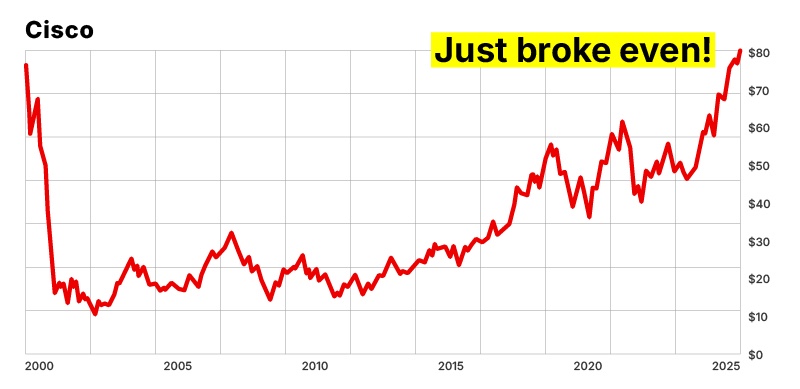
Cisco was once the MOST valuable company on Earth. Then it fell 80% - and investors waited 25 YEARS just to break even. A Wall Street legend is out with a new warning: "It's about to happen again." He says many of today's overhyped AI darlings - stocks sitting in almost every 401(k) in America - cou...
Watch his talk here before it's too late.
It has nothing to do with AI, tech, or precious metals. Most investors have never heard of it. But every time the Fed has made a major move, this ticker has moved with it… and the profits have been extraordinary. 117% in under a month. 89% in seventeen days. 35% in two days. Now Trump is triggering...
Click here to get the name of this ticker — completely free.
Elon just created a device he believes will be "the biggest product ever." He thinks it could 70x investors' money. And he's about to make a major announcement… By the end of this month. Maybe even tomorrow on X. He's going to make this game-changing device available to the public for the first time...
Click here to find out how you can claim a stake in this 70x AI agent.